
 16+ Years Building Digital Products That Ship
 16+ Years Building Digital Products That Ship

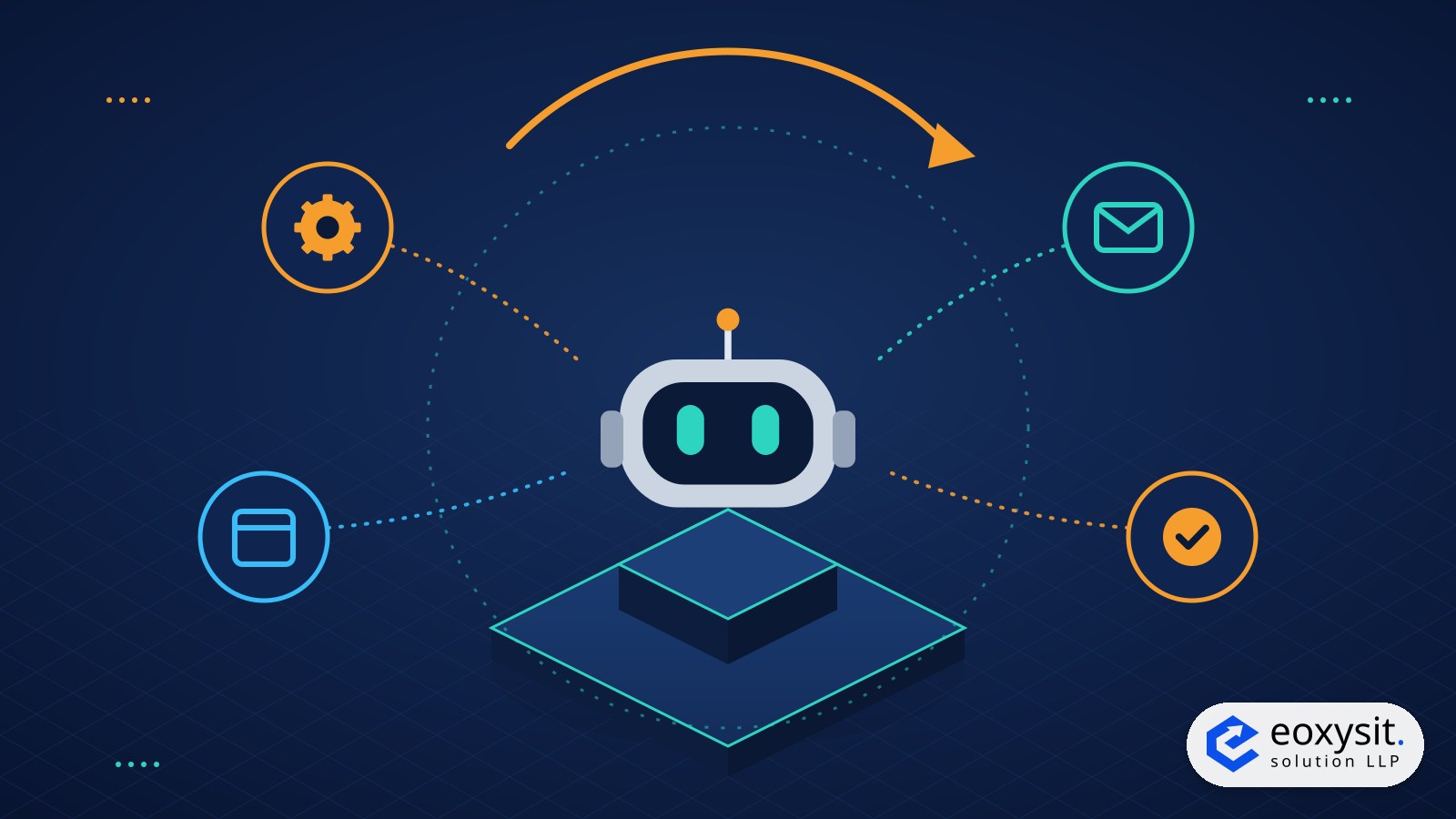
An AI agent that works in a demo can still fail in production: it picks the wrong tool, loops, or tells a customer something is done when it is not. AI agent evaluation is how you find those failures before users do. This guide explains the key ideas in plain English and gives you a starter plan.
We lean on Anthropic’s engineering article Demystifying evals for AI agents (published 9 January 2026), which is one of the clearest public write-ups. Checked on 5 November 2026.
Key takeaways
- An eval gives the agent an input and applies grading logic to measure success.
- Agents act over many turns, so grade the outcome (what actually changed) as well as the final message.
- Use three grader types: code-based, model-based and human, each with trade-offs.
- pass@k rewards at least one success in k tries; pass^k demands success every time, which matters for customer-facing agents.
- Anthropic suggests 20 to 50 simple tasks drawn from real failures is a good start.
In this guide
- The key terms
- Three kinds of graders
- pass@k vs pass^k
- Capability vs regression evals
- A starter plan
- After launch
- FAQ
The key terms
| Term | Meaning |
|---|---|
| Task | One test with defined inputs and success criteria |
| Trial | One attempt at a task; run several because outputs vary |
| Grader | Logic that scores part of the agent’s performance |
| Transcript | The full record of a trial: messages, tool calls, results |
| Outcome | The final state of the environment, e.g. does the booking exist? |
| Eval harness | The system that runs tasks, records steps and aggregates scores |
The difference between transcript and outcome is the most useful idea here. An agent may say “your refund is processed”; the outcome check asks whether the refund record actually exists.

Three kinds of graders
| Grader | Good for | Watch out for |
|---|---|---|
| Code-based | Exact checks: tool called, field set, test passed | Brittle with open-ended text |
| Model-based (LLM judge) | Tone, helpfulness, rubric scoring | Non-deterministic, costs more, needs calibration |
| Human | Gold-standard judgement, calibrating judges | Slow and expensive |
Building an agent and need it tested properly? Eoxys designs eval suites, harnesses and dashboards. Get a real project estimate within 24 hours. NDA on request.
pass@k vs pass^k
Because agents are non-deterministic, run each task more than once. Two metrics describe the results:
- pass@k: the chance of at least one success in k trials. Useful when a person can pick the best of several attempts.
- pass^k: the chance that all k trials succeed. Anthropic’s example: a 75% per-trial success rate over 3 trials gives (0.75)³, about 42%. This is the number that matters when every customer expects the same reliable behaviour.
Capability vs regression evals
| Type | Question | Expected pass rate |
|---|---|---|
| Capability | What can the agent do well? | Starts low; you climb it |
| Regression | Does it still handle what it used to? | Close to 100% |
A starter plan
- Collect 20–50 real tasks from support tickets, sales requests or internal workflows, including known failures.
- Write success criteria for each: which tools, which final state, which words are not allowed.
- Build a sandbox with test data so the agent can act safely.
- Add graders: code checks first, then a rubric-based model judge.
- Run 3+ trials per task and track pass@1 and pass^3.
- Read transcripts of failures every week; fix prompts, tools or guardrails.
- Add safety tasks such as prompt injection, based on the OWASP GenAI Top 10 and our agent security guide.
After launch
Evals do not replace production monitoring. Log real traces with an observability tool, sample conversations for human review, and turn every serious incident into a new eval task. For governance, the NIST AI Risk Management Framework describes measuring and monitoring AI risks over the system’s life. If you are still choosing the architecture, start with prompt, loop or graph agents.
FAQ
What is AI agent evaluation?
It is testing an agent with defined tasks and grading logic to measure whether it succeeds. Unlike single-prompt tests, agent evals look at multi-step behaviour: which tools were called, what changed in the environment and whether the final answer was correct and safe.
How many test cases do I need?
Anthropic’s engineering team suggests 20 to 50 simple tasks drawn from real failures is a great start for a new agent. Early changes have large effects, so small suites detect them. Mature agents need larger, harder suites to spot smaller changes.
Should I use an LLM as a judge?
Yes, for things code cannot check easily, such as tone or helpfulness, but score against a clear rubric and calibrate it against human reviews. Use code-based checks wherever there is an exact right answer, because they are cheaper and repeatable.
What is the difference between pass@k and pass^k?
pass@k is the chance of at least one success in k attempts; it rises as k grows. pass^k is the chance that all k attempts succeed; it falls as k grows. Customer-facing agents should be judged on pass^k because users expect consistency.
When should we start building evals?
As early as possible. Anthropic notes evals get harder to build the longer you wait, because early product requirements translate naturally into test cases. Start with a small suite during the prototype and grow it with every bug you find.
Can Eoxys build and test our AI agent?
Yes. We build agents with eval suites, sandboxes and monitoring from day one. See AI agent cost or hiring an AI agent developer, or get a real project estimate within 24 hours.
Work with Eoxys
Eoxys IT Solution LLP has built websites, apps and AI products since 2009, with 700+ projects delivered. See the work on our portfolio, or explore our AI and machine learning solutions.
Eoxys builds AI agents that are tested, monitored and ready for real users. Get a real project estimate within 24 hours. NDA on request. Prefer to talk? Call +91 96678 22661.
Related reading:
- AI Agent Observability: How to Trace and Debug Your Agents
- AI Agent Security: The OWASP Agentic Top 10 Explained for 2026
- Prompt, Loop or Graph? How to Choose the Right AI Agent Approach in 2026
Sources
Checked on 5 Nov 2026.
- Anthropic: Demystifying evals for AI agents (Jan 2026)
- Anthropic: Building effective agents
- OWASP GenAI Security Project: LLM Top 10
- NIST AI Risk Management Framework

Shafeeq Khan is a web developer who creates modern, responsive, and user-friendly websites with clean code and creative design


