
The Future of Work: How AI and Automation Are Reshaping Careers in 2026
Healthcare Enters the AI-First Decade
Healthcare in 2026 is shifting from reactive treatment to proactive, data-driven, and deeply personalized care. AI systems now support clinicians at every step—triage, diagnosis, treatment planning, and follow up—while hospitals rely on automation to manage operations, supply chains, and patient flows more efficiently. Patients experience faster diagnoses, more tailored therapies, and continuous monitoring inside and outside hospital walls.
Predictive and Preventive Medicine Becomes the Norm
- AI models combine EHR data, wearables, genomics, and lifestyle information to predict risks for heart disease, diabetes, mental health crises, and more—often months before symptoms surface.
- Health systems deploy risk-stratification dashboards to target high-risk populations with early interventions, lowering readmissions and emergency visits.
AI Diagnostics and “Clinical Copilots”
- Multimodal AI models interpret imaging CT, MRI, X-ray), pathology slides, and clinical notes together, improving accuracy and consistency of diagnoses in radiology, oncology, and cardiology.
- “Clinical copilots” embedded in EHRs summarize charts, draft notes, suggest differential diagnoses, and surface guideline based treatment options in real time, reducing documentation burden and cognitive load for clinicians.
Digital Twins and Personalized Treatment
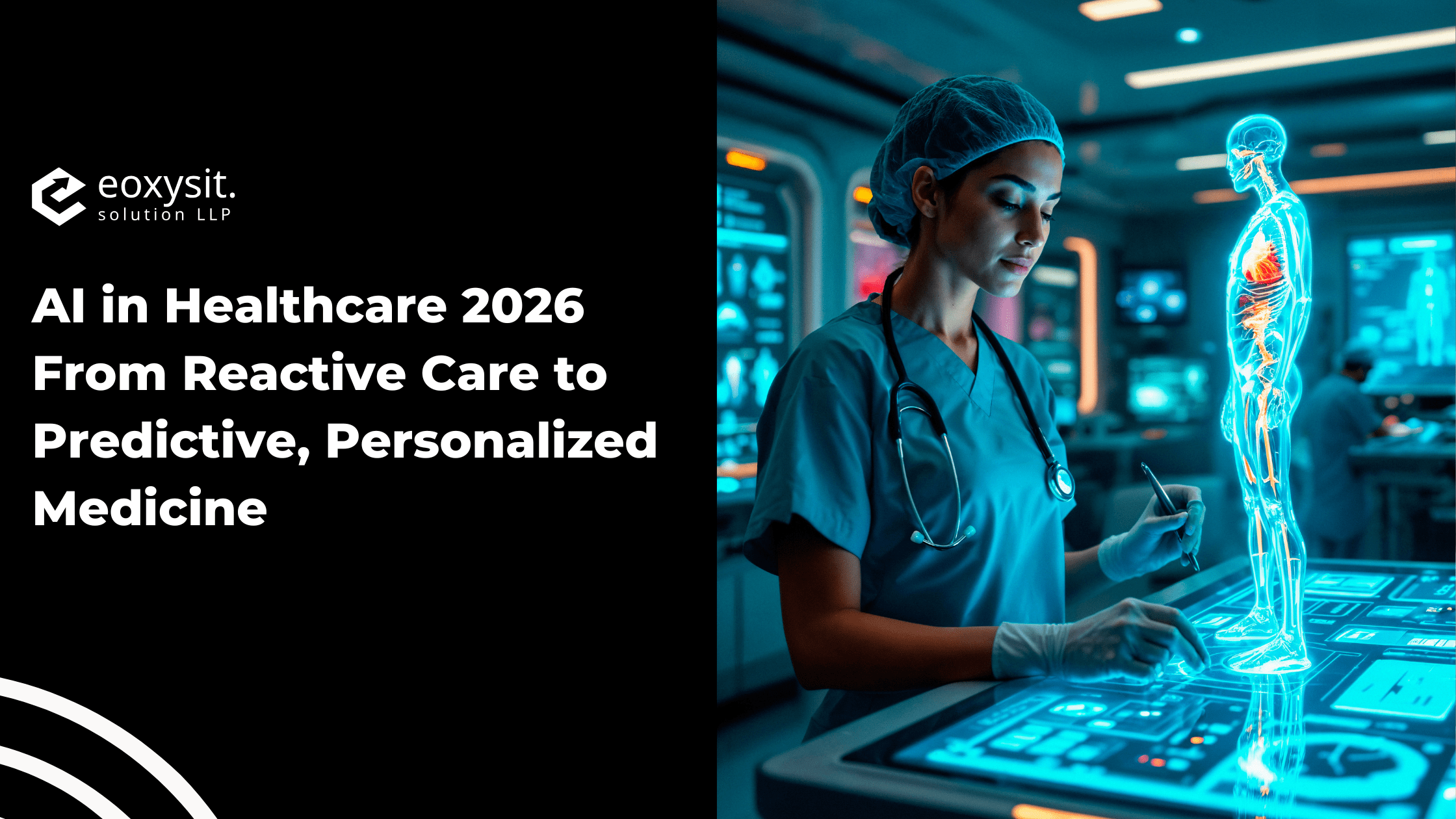
- Early “patient digital twins” simulate how an individual might respond to different drugs, doses, or surgical approaches, helping personalize oncology, cardiology, and rare-disease care.
- AI-driven genomics pipelines speed up variant interpretation and support targeted therapies and gene-based treatments, especially in cancer and inherited disorders.
Hospital Automation and Operational AI
- AI optimizes bed management, OR scheduling, and staffing by forecasting admissions and procedure volumes, cutting wait times and overcrowding.
- Computer
vision systems monitor OR workflows, hand-hygiene compliance, and safety events, while robotic process automation handles billing, coding, and prior authorizations.
Home Care, Remote Monitoring, and Virtual Wards
- AI-enhanced remote monitoring solutions track vitals, symptoms, and behavior changes at home, escalating only when risk thresholds are crossed.
- “Virtual wards” allow high-risk patients to be managed at home with continuous AI risk scoring and clinician oversight, freeing physical capacity in hospitals.
Generative AI in Medicine: Documentation, Education, and Engagement
- Generative AI drafts discharge summaries, patient letters, consent forms, and educational materials at appropriate reading levels, saving clinicians hours per week.
- Chat-based health assistants help patients understand their conditions, medications, and lifestyle recommendations in conversational language, improving adherence and satisfaction.
Safety, Regulation, and Trust in 2026
- Regulators tighten rules around “high-risk” AI in healthcare, demanding transparency, bias monitoring, and post-market performance surveillance.
- Health systems create AI governance boards to vet models, monitor drift, and ensure that clinicians remain the final decision-makers, especially for life-critical choices.
Key Challenges Ahead
- Data fragmentation and poor interoperability still hinder AI performance and scaling across institutions.
- Bias in training data, lack of representation, and variable data quality pose ongoing risks; organizations must invest in dataset curation and fairness audits.
- Clinician trust and workflow fit remain critical—tools that donʼt genuinely save time or improve care see low adoption.
Conclusion: A Smarter, More Proactive Health System
By 2026, AI is no longer experimental in healthcare—it is embedded across diagnostics, operations, and patient engagement. Organizations that pair strong governance with thoughtful implementation see reductions in cost and burnout, and measurable gains in outcomes and patient experience. As models grow more multimodal, agentic, and personalized, the health systems that win will be those that treat AI not as a bolt on tool, but as a core capability in delivering safer, smarter, and more humane care.

Shafeeq Khan is a web developer who creates modern, responsive, and user-friendly websites with clean code and creative design