Founders and CTOs face the same choice in late 2026: buy an off-the-shelf AI agent from platforms such as Salesforce Agentforce, Zendesk AI agents, Fin, Microsoft Copilot Studio / Foundry Agent Service, or ServiceNow — or build a custom AI agent with the OpenAI Agents API/SDK, Claude Managed Agents, or LangGraph.
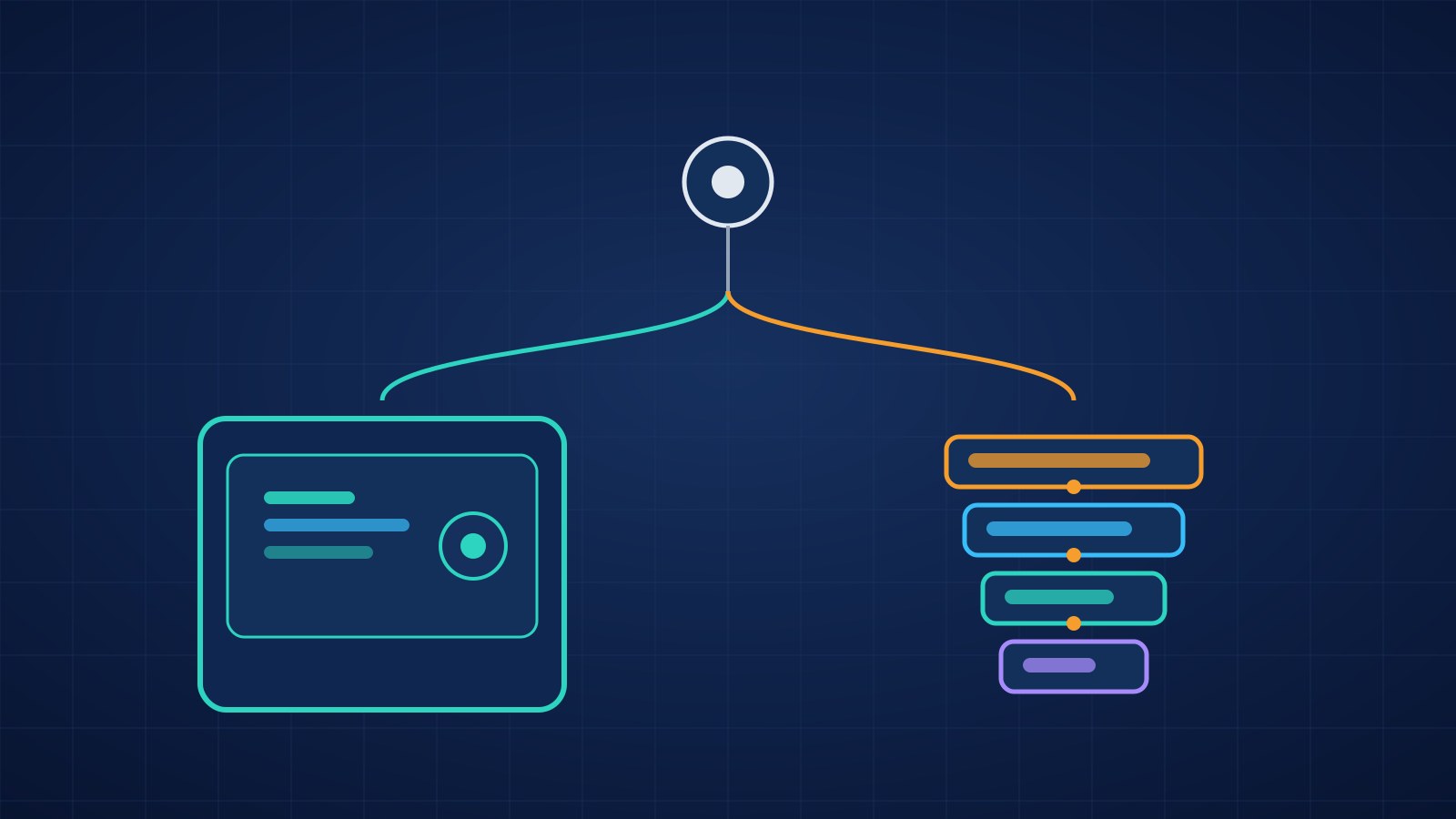
This guide covers the custom AI agent vs off-the-shelf trade-off: what each path means, when buying wins, when building pays off, and when a hybrid stack is smarter.
Key takeaways
- Off-the-shelf agents ship fastest for common support, CRM and IT workflows already in your SaaS suite.
- Custom agents win when product IP, proprietary data, deep integrations or regulated actions are the differentiator.
- Most teams go hybrid: buy commodity channels and helpdesk AI; build the domain logic you own.
- Cost shape differs: SaaS seats/credits/per-resolution vs custom build hours + tokens. See our 2026 AI agent cost guide for estimate ranges.
- Decide with a checklist (differentiation, data, integrations, compliance, lock-in) — not a vendor demo alone.
In this guide
- What off-the-shelf vs custom means in 2026
- Comparison: time, control, data, cost, lock-in
- When to buy
- When to build
- The hybrid pattern
- Decision checklist
- Risks and limits
- FAQ
What “off-the-shelf” vs “custom” means in 2026
Off-the-shelf means you configure an agent inside a vendor platform that already owns channels, CRM or IT workflows. Examples verified on 16 Oct 2026: Salesforce Agentforce, Zendesk AI agents, Fin, Microsoft Copilot Studio with Foundry Agent Service, and ServiceNow AI assistant experiences.
Custom means you own the orchestration loop: models, tools, APIs and deployment. OpenAI documents a managed Agents API and an in-app Agents SDK; Anthropic offers Managed Agents and an Agent SDK; LangGraph is a low-level runtime for durable, stateful graphs. Model choice keeps expanding (Gemini 4 Argon API access broadened in Oct 2026), but the real question is who owns the agent loop. For the landscape, see AI agents in 2026.
Comparison: time-to-value, control, data, cost and lock-in
Use this table as a decision lens. It is qualitative on purpose — we do not invent TCO numbers. Check each vendor’s current pricing page before you commit.
| Dimension | Off-the-shelf platform | Custom-built agent |
|---|---|---|
| Time-to-value | Days to a few weeks if your workflow matches the product | Weeks to a few months for a production MVP (estimate; depends on scope) |
| Control of behaviour | Instructions, actions and guardrails inside the vendor builder | Full control of prompts, tools, graph, approvals and fallbacks |
| Data and IP | Data lives in (or syncs to) the vendor; IP is mostly configuration | You keep proprietary logic, evals and often the retrieval index |
| Integrations | Strong inside the vendor ecosystem; extras via connectors/MCP | Any API you can secure; deeper ERP/custom systems are easier |
| Compliance posture | Vendor certifications + your config; shared responsibility | You design logging, residency, consent and audit trails |
| Cost shape | Seats, credits or per successful resolution / conversation | Build cost + token/tool spend + hosting/observability |
| Lock-in | High if channels, knowledge and history sit only in that suite | Lower if you keep a portable orchestration layer and eval harness |
Choosing between a packaged agent and a custom build? Share your workflow and systems. Get a real project estimate within 24 hours. NDA on request.
When to buy an off-the-shelf agent
Buy when the job is common and not your product. Typical fit:
- Level-1 support, FAQ deflection and triage in Zendesk, Intercom/Fin or Salesforce Service.
- CRM-tied sales or service workflows where Agentforce (or similar) already holds customer context.
- Internal IT / employee requests in ServiceNow or Microsoft 365, where governance beats unique IP.
Buying still needs clean knowledge bases, hand-off rules and an owner for quality. Prefer a vendor when you need a working agent this quarter and will not maintain orchestration code.
When to build a custom AI agent
Build when the agent is part of your product or a regulated workflow you must own:
- Product IP: policies, tools and reasoning are a feature customers pay for.
- Proprietary data that should not become a vendor’s default retention or training input.
- Deep integrations across custom backends, ERPs or partner APIs vendors do not cover well.
- Actions that move money or change records — you need your own approvals, evals and audit trail.
Budget from scoped hours and token usage. Our cost to build an AI agent in 2026 guide shows estimate ranges. On a composable stack, the agent is another module (composable AI stacks).
The hybrid pattern most teams should start with
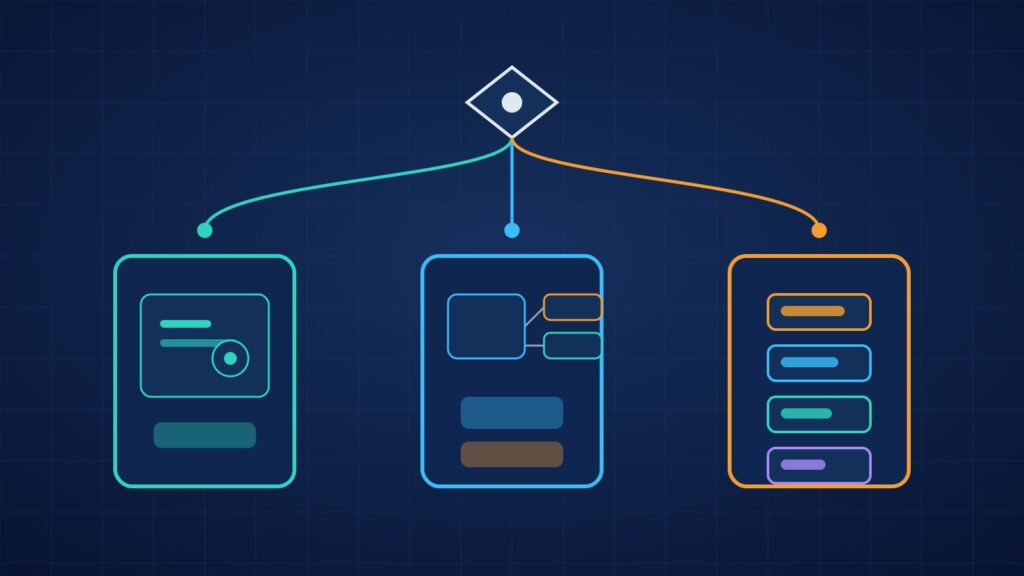
Many strong setups buy the commodity layer and build the domain layer: helpdesk AI, channel widgets and CRM assistants stay on the platform, while domain tools, private retrieval, approval gates and evals stay in code you own. Connect them with APIs or MCP so the packaged front door can call your tools. The same rule as other buy-vs-build work, including AI hiring software: own what differentiates you; rent what does not.
Decision checklist for founders and CTOs
Score each item before you sign a contract or open a repo:
| Question | Lean buy if… | Lean build if… |
|---|---|---|
| Is this workflow unique to us? | No — competitors use the same playbook | Yes — it is core product or process IP |
| Where must data live? | Vendor region + DPA is acceptable | Strict residency, retention or purpose limits |
| How many systems must the agent touch? | Mostly one suite you already pay for | Many custom or partner systems |
| Who maintains quality after launch? | Ops can tune the vendor builder | Engineering will own prompts, tools and evals |
| What happens if we switch vendors in 18 months? | Painful but acceptable | Must keep portable traces, tools and tests |
| Do we need production tracing now? | Vendor observability is enough | We need OpenTelemetry-style traces we control (agent observability guide) |
If you want a partner to pressure-test the checklist and propose a stack, Eoxys offers AI development services and chatbot / agent builds with a real estimate within 24 hours.
Risks and limits
- Vendor lock-in and shadow AI. Knowledge and history can be hard to move; teams may also paste data into unapproved bots. Prefer exports, an approved-tool list, SSO/DLP and a written exit plan.
- Privacy and regulation. In India, map personal-data flows under the DPDP Act (see our DPDP checklist for AI apps). In the EU, high-risk systems face logging duties under AI Act Article 12 — check with counsel; this is not legal advice.
- Cost surprises. Per-resolution SaaS bills spike with volume; custom token bills spike with long contexts and retries. Cap both and review weekly.
- Opaque agents. Without traces you cannot debug or audit. Anthropic’s OpenTelemetry tracing for Claude Platform (public beta, 14 Oct 2026) shows observability is becoming table stakes — apply it on any path.
FAQ
What is the difference between a custom AI agent and an off-the-shelf tool?
An off-the-shelf agent runs inside a vendor platform with prebuilt channels, actions and admin UI. A custom agent runs orchestration you control — via an Agents SDK/API, Managed Agents, or a framework such as LangGraph — so you own tools, prompts, data flow and deployment. Hybrid mixes both.
When should a startup buy instead of build?
Buy when the workflow is standard support or CRM work, time-to-value matters more than unique IP, and your data rules fit the vendor’s DPA. Build when the agent is part of your product, needs deep custom integrations, or must meet strict audit and residency requirements you cannot meet by configuration alone.
Is Salesforce Agentforce or Microsoft Copilot enough for most SMBs?
Often yes for CRM- or Microsoft 365-centric teams whose jobs match the product’s out-of-the-box agents. They are weaker when your differentiator sits outside that suite. Treat a proof of concept on your real tickets and systems as the decision, not the marketing demo.
How much does a custom AI agent cost compared with SaaS?
Shapes differ: SaaS is usually seats, credits or per resolution; custom is build effort plus tokens and hosting. We publish estimate ranges for builds in our cost to build an AI agent in 2026 guide. We do not invent TCO comparisons here — ask for a scoped estimate on your workflow.
Can we start with an off-the-shelf agent and migrate later?
Yes, if you keep knowledge sources exportable, define tool contracts clearly, and store evaluation datasets outside the vendor. Migration cost is real, so plan the exit criteria when you buy, not after lock-in. A hybrid design makes that move cheaper.
What about Intercom Fin, Zendesk AI and ServiceNow?
They are strong when customer or employee service is the job and you already live in that helpdesk or ITSM stack. Verify current packaging and pricing on each vendor’s site as of your purchase date — plans and resolution definitions change.
Do custom agents need observability from day one?
Yes, at least in a light form. Log task success, cost, latency and hand-offs to staff, with personal data masked before storage. Full dashboards and eval harnesses can follow as volume grows. Our AI agent observability guide covers traces, OpenTelemetry and production practices.
How do I get an estimate from Eoxys?
Tell us the workflow, systems to connect, data rules and whether you lean buy, build or hybrid. We reply with a scoped approach and a real project estimate within 24 hours, using fixed-cost, dedicated-team or hourly options. NDA on request.
Choose the path that fits — then ship with Eoxys
Eoxys IT Solution has built software from Jaipur since 2009, with 700+ projects delivered. See proof on our portfolio. We help founders and CTOs compare platforms with custom agents, then implement the stack that matches the checklist.
Whether you need a support chatbot or agent, a custom AI and machine learning solution, or AI developers on a dedicated team, get a real project estimate within 24 hours. NDA on request.
Related reading:
- AI Agents in 2026: From Helpful Assistants to Autonomous Digital Co-workers
- How Much Does It Cost to Build an AI Agent in 2026?
- AI Agent Observability: How to Trace and Debug Your Agents
Sources
Checked on 16 Oct 2026 against Salesforce Agentforce, Microsoft Foundry Agent Service and Copilot Studio docs, Zendesk AI agents, Fin, ServiceNow Now Assist pages, OpenAI Agents docs, Anthropic Managed Agents and Agent SDK docs, LangGraph overview, Google’s Gemini 4 Argon announcement, Anthropic’s OpenTelemetry agent-observability note, and the EU AI Act Service Desk (Article 12). Vendor prices were not re-quoted (plans change often). No invented TCO figures.
- Salesforce: Agentforce
- Microsoft Azure: Foundry Agent Service
- Microsoft Learn: What’s new in Copilot Studio
- Zendesk: AI agents
- Fin: What is Fin AI Agent?
- ServiceNow: Now Assist / Otto
- OpenAI: Agents (API and SDK)
- Anthropic: Claude Managed Agents overview
- Anthropic: Claude Agent SDK overview
- LangChain: LangGraph overview
- Google: Gemini 4 Argon announcement
- Anthropic: Agent observability on the Claude Platform (14 Oct 2026)
- European Commission AI Act Service Desk: Article 12

Shafeeq Khan is a web developer who creates modern, responsive, and user-friendly websites with clean code and creative design