 16+ Years Building Digital Products That Ship
 16+ Years Building Digital Products That Ship

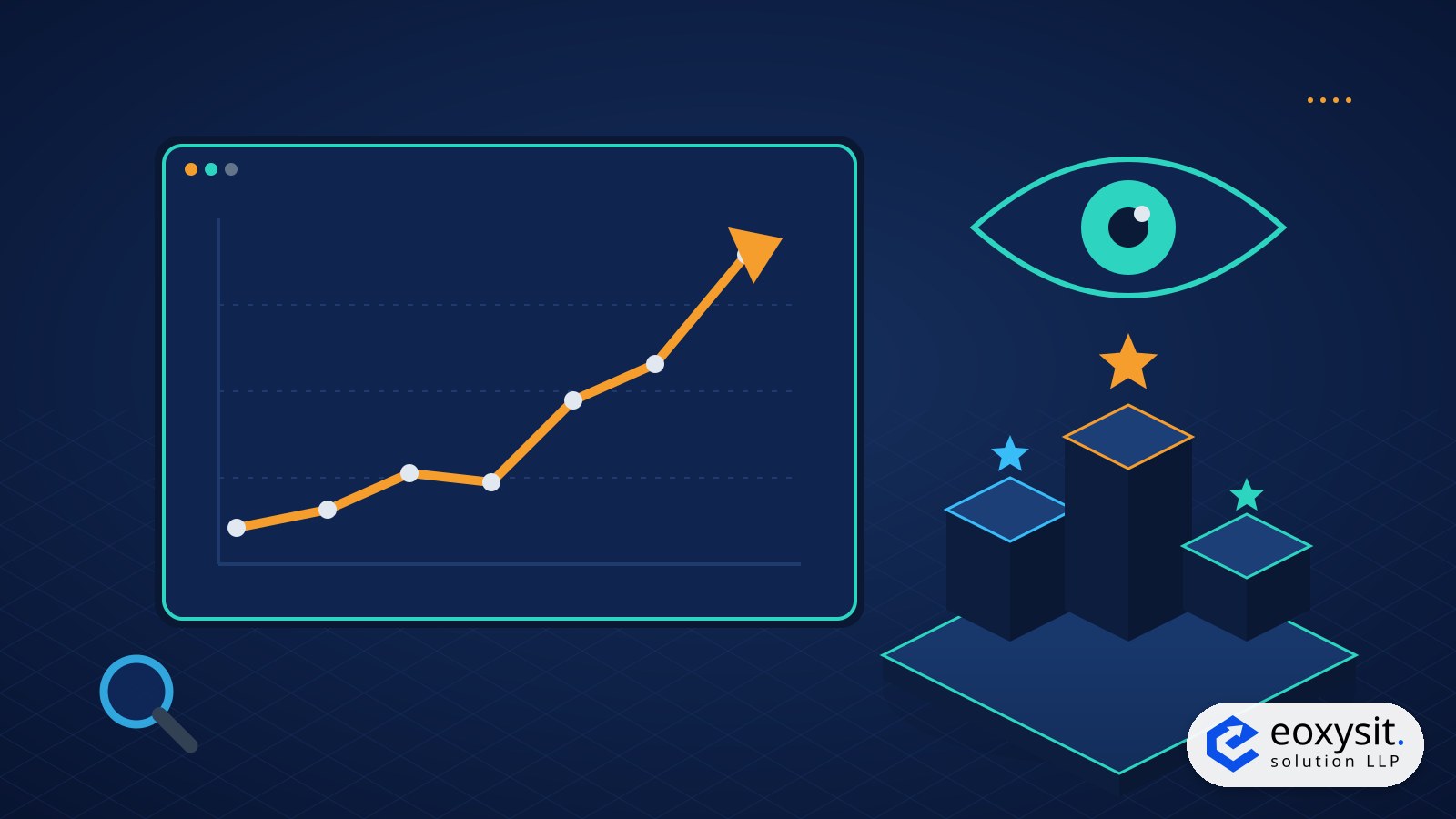
Perplexity is the answer engine many researchers, analysts and B2B buyers use when they want sources, not just an answer. Every response shows numbered citations, so being one of those links puts your brand directly in front of someone comparing options. Perplexity SEO is the work of making sure Perplexity can reach your pages and wants to cite them.
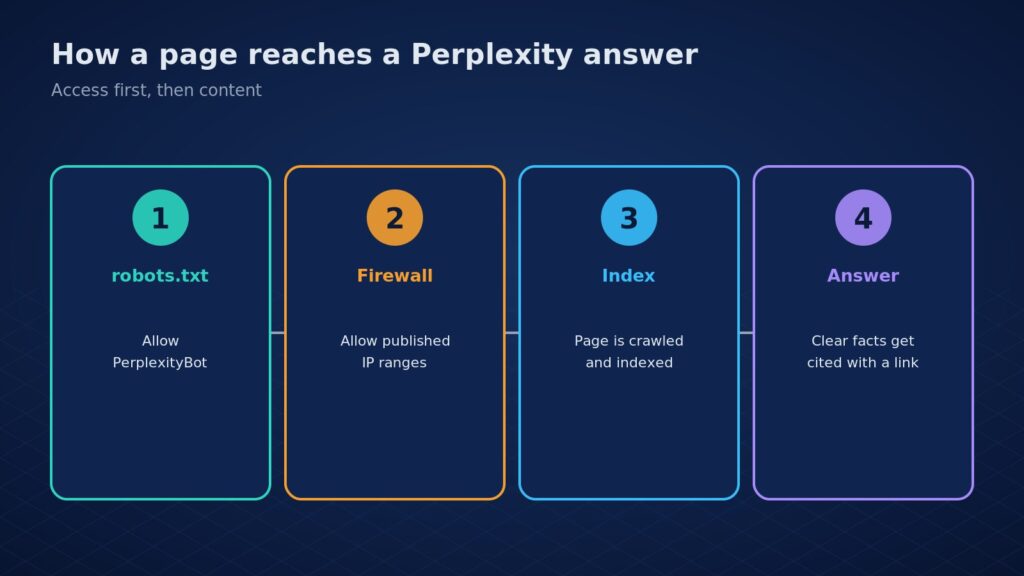
Unlike Google, Perplexity publishes little about ranking. It does publish exactly how its crawlers work (Perplexity docs), and that is where most businesses lose out. This guide covers access first, then content and tracking. Checked on 5 November 2026.
Key takeaways
- Perplexity uses two agents: PerplexityBot for its search index and Perplexity-User for live fetches when a user asks a question.
- Perplexity says PerplexityBot is not used to crawl content for AI foundation models.
- Firewalls and bot protection are the most common blockers; Perplexity publishes IP ranges to allow.
- Perplexity-User generally ignores robots.txt because a person requested the fetch.
- Pages with clear facts, dates, tables and sourced claims are the easiest to cite.
In this guide
- How Perplexity reaches your site
- Access checklist
- Content Perplexity cites
- Perplexity vs Google vs ChatGPT
- How to track Perplexity
- FAQ
How Perplexity reaches your site
| User agent | What it does | robots.txt |
|---|---|---|
| PerplexityBot | Surfaces and links websites in Perplexity search results; not used for AI foundation model training | Respected; allow it to appear in results |
| Perplexity-User | Visits pages to answer a specific user’s question and link to them | Generally ignored, as the fetch is user-requested |
Perplexity says robots.txt changes can take up to 24 hours to apply, and it publishes IP ranges for both agents, for example at perplexitybot.json. Pair user-agent checks with IP checks, because anyone can fake a user-agent string.
There is some controversy here. In August 2025 Cloudflare published research saying it had seen Perplexity use undeclared crawlers to get around no-crawl directives (Cloudflare). Perplexity disputed parts of it. For a business that wants to be cited, the practical point is the same: decide your policy, then make your settings match it.
Access checklist
| Check | What to do | Why it matters |
|---|---|---|
| robots.txt | Allow PerplexityBot on public pages | Blocked pages cannot enter its index |
| Cloudflare custom rules | Add a Skip rule for Perplexity user agents matched to their IP ranges | Default bot rules can challenge it |
| Cloudflare Bot Fight Mode | Know it cannot be skipped by custom rules | It can still challenge Perplexity |
| AWS WAF | Allow rule combining an IP set and a User-Agent match | Blocking rules evaluated first will win |
| Rendering | Make key text available in HTML | Content loaded only by JavaScript may be missed |
| Server logs | Look for PerplexityBot hits after changes | Proves the fix worked |
If you run WordPress, our guide to llms.txt and AI crawlers on WordPress covers the plugin and robots.txt side.
Is your firewall quietly blocking AI search? Eoxys checks robots.txt, CDN rules and logs for Perplexity, ChatGPT and Google, then fixes them. Get a real project estimate within 24 hours. NDA on request.
Content Perplexity cites
Perplexity’s answers show the sources they draw on, so pages that state facts plainly and back them up are the easiest to cite. Formats that help:
- Comparison tables with clear rows: price, features, limits, dates.
- Answer-first openings that answer the question in one or two sentences.
- Dated facts such as “checked on” lines, version numbers and release dates.
- Linked sources to official documents, so your page is a reliable hop.
- Specific pages for specific questions, instead of one long page on everything.
Perplexity also draws on what others say about you: reviews, directories, forum threads and press. That off-site picture is covered in our guide to getting recommended by ChatGPT, and the same work helps here.
Perplexity vs Google vs ChatGPT
| Engine | How it gets pages | Main control |
|---|---|---|
| Perplexity | Own index via PerplexityBot, plus live user fetches | robots.txt for PerplexityBot; firewall allow-lists |
| Google AI Mode and AI Overviews | Google Search index | Googlebot access and snippet controls |
| ChatGPT search | OpenAI crawlers and search partners | OAI-SearchBot and related user agents |
How to track Perplexity
- Check analytics referrals from perplexity.ai and group them in an AI-search channel.
- Search server logs for PerplexityBot and Perplexity-User requests to see which pages they fetch.
- Run a fixed set of buyer questions in Perplexity each month and note which URLs are cited.
- Combine it with the ChatGPT and Google tracking in our AI traffic guide and an AI visibility audit.
FAQ
How do I get my website cited by Perplexity?
First make sure PerplexityBot can reach your pages: allow it in robots.txt and in any firewall or CDN bot rules, using Perplexity’s published IP ranges. Then publish clear, sourced, answer-first pages with tables and dates. Track referrals and cited URLs monthly to see what works.
Does Perplexity train AI models on my content?
Perplexity says PerplexityBot is used to surface and link websites in search results and is not used to crawl content for AI foundation models. Perplexity-User fetches pages for a specific user’s question. Read Perplexity’s current documentation and terms if training use matters to your legal team.
Why does Perplexity not show my site?
The usual causes are blocked access, from robots.txt, Cloudflare bot rules or a WAF, and thin pages with no clear answer. Check your logs for PerplexityBot requests. If there are none, fix access first. If it visits but never cites you, improve the pages for the questions you care about.
Should I block Perplexity?
That is a business decision. Blocking PerplexityBot removes you from its search results, which also removes the citation and referral. Publishers with paid content sometimes block; most service businesses gain more from being cited. Whatever you choose, set robots.txt and firewall rules to match.
Is Perplexity SEO different from Google SEO?
The content basics are the same: useful, accurate, well-structured pages. The difference is access. Perplexity runs its own crawler and index, so you must allow it separately, and firewall rules built for Googlebot may still block it. Track it as its own channel.
Can Eoxys help with Perplexity and AI search visibility?
Yes. Our AEO service checks crawler access across Perplexity, ChatGPT and Google, fixes CDN and WordPress settings, and builds pages worth citing. Get a real project estimate within 24 hours.
Work with Eoxys
Eoxys IT Solution LLP has built websites, apps and AI products since 2009, with 700+ projects delivered. See the work on our portfolio, or explore our AI and machine learning solutions.
We help businesses get found and cited in Perplexity, ChatGPT, Google AI Mode and Copilot. Get a real project estimate within 24 hours. NDA on request. Prefer to talk? Call +91 96678 22661.
Related reading:
- AEO Services: Get Cited in ChatGPT and Google AI Overviews
- llms.txt and AI Crawlers on WordPress: What to Allow in 2026
- AI Visibility Audit: Check If ChatGPT and AI Overviews Cite You
Sources
Checked on 5 Nov 2026 against Perplexity’s crawler documentation and Cloudflare’s research blog.
- Perplexity docs: Perplexity Crawlers
- Perplexity: PerplexityBot IP ranges (JSON)
- Cloudflare blog: Perplexity stealth crawling research (Aug 2025)

Shafeeq Khan is a web developer who creates modern, responsive, and user-friendly websites with clean code and creative design