If your chatbot, document pipeline or internal tool still calls GPT-4o or GPT-4.1, it has a deadline. On 14 October 2026, OpenAI told developers that these models leave its API on 14 January 2027, fine-tuned versions included. After that date, requests to them stop working.
The GPT-4o API shutdown is not just a model-name swap. OpenAI’s recommended replacement, GPT-6 Luna, is far cheaper per token but reasons by default, handles some parameters differently and cannot be fine-tuned. This guide explains who is affected, what changes and a step-by-step migration plan, with every date and price checked on 19 October 2026 against OpenAI’s deprecations page and model docs.
Key takeaways
- GPT-4o, GPT-4o mini, GPT-4.1 and GPT-4.1 mini shut down in OpenAI’s API on 14 January 2027. OpenAI recommends
gpt-6-lunafor all four. - A separate batch, including the May 2024 GPT-4o snapshot, GPT-4.1 nano, o3-mini and o4-mini, shuts down sooner: 23 October 2026.
- Start GPT-6 Luna with reasoning effort set to “none”. That keeps behaviour closest to GPT-4.x and keeps function calling working in Chat Completions.
- Fine-tuned GPT-4o and GPT-4.1 models stop on the same day and Luna has no fine-tuning, so those apps need the most work.
- Budget about two to four weeks for testing and gradual rollout (our estimate), which means starting in November, not January.
In this guide
- What OpenAI announced
- Is your app affected?
- What changes when you move to GPT-6 Luna
- What the switch does to your bill
- A six-step migration plan
- Fine-tuned models: the hard case
- Risks and limits
- FAQ
What OpenAI announced about the GPT-4o API shutdown
OpenAI’s deprecations page lists a “GPT-4 series” notice dated 14 October 2026. It removes these model snapshots from the API on 14 January 2027 and names one replacement for all of them:
| Model | Snapshot IDs being removed | Shutdown date | OpenAI’s recommended replacement |
|---|---|---|---|
| GPT-4o | gpt-4o-2024-08-06, gpt-4o-2024-11-20 | 14 Jan 2027 | gpt-6-luna |
| GPT-4o mini | gpt-4o-mini-2024-07-18 | 14 Jan 2027 | gpt-6-luna |
| GPT-4.1 | gpt-4.1-2025-04-14 | 14 Jan 2027 | gpt-6-luna |
| GPT-4.1 mini | gpt-4.1-mini-2025-04-14 | 14 Jan 2027 | gpt-6-luna |
OpenAI also says fine-tuned versions of these models follow the same shutdown schedule as their base models. The undated names your code may use, such as gpt-4o, currently point to these snapshots, so treat them as affected too.
Two other dates to check this week
- 23 October 2026: an earlier notice on the same page shuts down
gpt-4o-2024-05-13,gpt-4.1-nano,gpt-4-turbo,gpt-3.5-turbo-0125,o3-mini,o4-mini,gpt-image-1and others. If any of those are in production, you have days, not months. - 11 December 2026: the original GPT-5 snapshots and
o3-2025-04-16are also scheduled for removal.
If you use these models through Microsoft’s Azure OpenAI service instead, the dates differ. Microsoft’s retirement schedule lists 14 April 2027 for gpt-4o (2024-08-06 and 2024-11-20), gpt-4o-mini and gpt-4.1.
Is your app affected?
Your app is affected if any request it sends to OpenAI names one of the models above. That is easy to miss, because model names hide in more places than the main codebase:
- Code and config: search your repositories and environment variables for gpt-4o and gpt-4.1. Check shared libraries and old microservices too.
- No-code automations: workflow tools and spreadsheet add-ons often store the model as a dropdown choice set years ago.
- Plugins and vendor tools: chatbot widgets, WordPress or e-commerce plugins and helpdesk add-ons that use your own OpenAI key may still default to GPT-4o. Ask the vendor for their plan.
- Fine-tuned models: any model ID starting with ft:gpt-4o or ft:gpt-4.1 shuts down too.
Two quick checks help. OpenAI says it emails organisations actively using a deprecated model, so look for that notice. And its deprecations page explains that the List models endpoint (GET /v1/models) returns a shutdown_date field you can monitor in code, so the next retirement does not surprise you.
What changes when you move to GPT-6 Luna
GPT-6 Luna is a reasoning model. That is the biggest difference from GPT-4o and GPT-4.1, which answer directly. According to OpenAI’s GPT-6 Luna model page, its default reasoning effort is “medium”, and it also supports “none”, “low”, “high”, “xhigh” and “max”.
| GPT-4o | GPT-4.1 | GPT-6 Luna | |
|---|---|---|---|
| Input / output price per 1M tokens | $2.50 / $10 | $2.00 / $8.00 | $0.10 / $0.50 |
| Cached input per 1M tokens | $1.25 | $0.50 | $0.01 (cache writes $0.125) |
| Context window | 128,000 | 1,047,576 | 1,050,000 |
| Max output tokens | 16,384 | 32,768 | 128,000 |
| Reasoning | No | No | Yes, default “medium” |
| Fine-tuning | Existing fine-tunes only | Existing fine-tunes only | Not supported |
The practical changes for your code, from OpenAI’s model page, migration guide and help article:
- Start with reasoning effort “none”. OpenAI’s GPT-4.x to Luna migration article says most GPT-4.x use cases are expected to migrate with this setting. Raise it only where tests show better results.
- Function calling in Chat Completions works only with effort “none”. If you want reasoning and tools together, the model page says to use the Responses API. OpenAI has a Responses migration guide.
- Some parameters must go. The GPT-6 developer guide says to remove temperature, top_p and top_logprobs (and logprobs in Chat Completions) whenever effort is not “none”.
- Reasoning tokens are billed as output. Higher effort means more tokens and more waiting, so measure both before you settle on a setting.
- Very long prompts cost more. Luna’s pricing notes say prompts above 272K input tokens are billed at 2x input and 1.5x output for the whole request. Long-document apps built on GPT-4.1’s large context should check this.
Not sure how much of your product runs on GPT-4o? Send us your stack and how you use OpenAI today. Get a real project estimate within 24 hours for an audit and migration plan. NDA on request.
What the switch does to your bill
On list prices, GPT-6 Luna costs a small fraction of GPT-4o per token. An illustrative example: a support chatbot or document pipeline that uses 200 million input tokens and 40 million output tokens a month, with no caching.
| Model (as of 19 Oct 2026) | Calculation | Monthly token cost |
|---|---|---|
| GPT-4o | (200 × $2.50) + (40 × $10) | $900 |
| GPT-4.1 | (200 × $2.00) + (40 × $8) | $720 |
| GPT-6 Luna, effort “none” | (200 × $0.10) + (40 × $0.50) | $40 |
This is our arithmetic, not a forecast. It leaves out caching, hosting and tax, and assumes the same token counts on both models. If you raise reasoning effort, output tokens grow, and the saving shrinks. The bigger cost is usually the engineering time to test and roll out, which is why a clear plan matters.
For a full view of build and running costs, see our AI agent cost guide.
A six-step migration plan
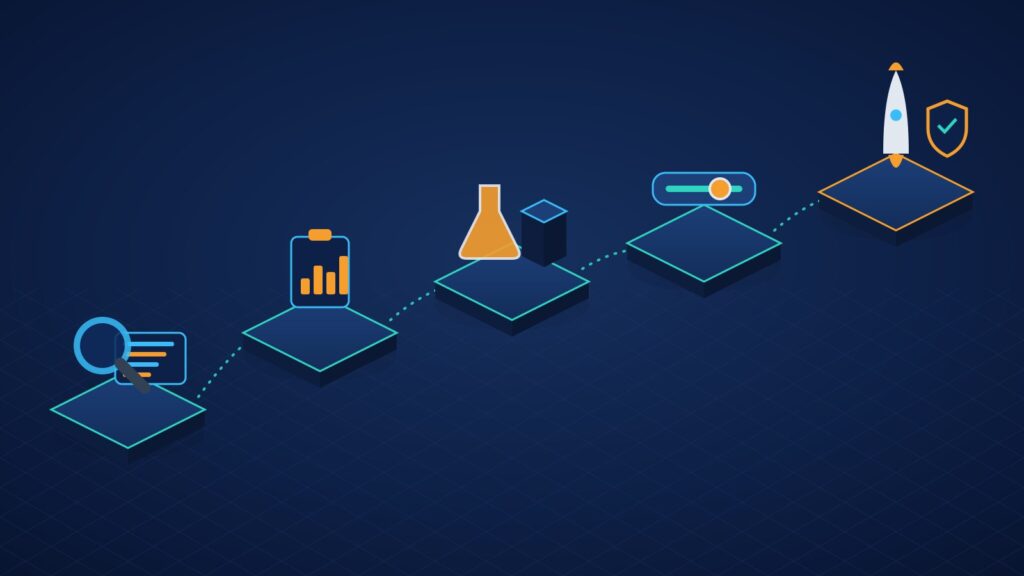
OpenAI’s help article recommends a baseline, evaluation, tuning and a gradual rollout. This is how we turn that into a project plan:
- Inventory every model call. List each feature, the model it calls, the API (Chat Completions, Responses or the retired Assistants API) and whether it uses tools, structured output or a fine-tuned model.
- Record a baseline. Pick 50 to 200 real requests per feature, including edge cases (our rule of thumb), and save today’s outputs, latency and cost.
- Swap in staging with effort “none”. Change the model, strip unsupported parameters and run the same test set. Check formatting, JSON output, tool calls and refusals.
- Tune where needed. Adjust prompts first. Try “low” effort only for features that fail, and compare quality against the extra cost and latency.
- Roll out gradually. Send a small share of production traffic to Luna, watch errors, ratings and cost, then move the rest well before 14 January.
- Make the next switch cheaper. Put the model name in config, add a thin routing layer and keep the test set, so a future retirement is a config change plus a test run.
Tracing helps a lot here. Our AI agent observability guide shows how to log each model and tool call so you can compare old and new behaviour side by side.
| App type | Typical effort to migrate (estimate) | Main risk |
|---|---|---|
| Simple prompt-in, text-out feature | Days | Tone or length changes |
| Chatbot with function calling | One to two weeks | Tool calls break if effort is not “none” in Chat Completions |
| Structured data extraction (JSON) | One to two weeks | Schema drift on edge cases |
| Fine-tuned model in production | Several weeks | No fine-tuning on Luna; behaviour must be rebuilt |
Fine-tuned models: the hard case
Fine-tuned GPT-4o and GPT-4.1 models stop on 14 January 2027 along with their base models. GPT-6 Luna’s model page lists fine-tuning as not supported, and OpenAI’s deprecations page says active existing customers can no longer create new fine-tuning jobs from 6 January 2027.
So the behaviour you trained in has to be rebuilt another way. The usual options, in order of effort:
- Better instructions plus examples: move your style rules into the prompt and include a handful of your best training examples. Prompt caching keeps the cost of a long fixed prompt down.
- Retrieval: if the fine-tune was really storing knowledge, put that knowledge in a searchable index and fetch it per request.
- Another provider or an open-weight model: if neither works, the task may need a model you can still fine-tune. Test it against the same baseline.
Choosing between providers is its own decision; our GPT-6.1 Sol vs Claude Sonnet 5.5 comparison covers how to weigh quality, price and limits.
Risks and limits
- Leaving it late: the notice gave about three months. Testing, fixes and a staged rollout take time, and December holidays shrink the calendar.
- Silent behaviour changes: answers may be longer, shorter or worded differently. Compare against your baseline, not your memory.
- Security: re-run your prompt-injection and tool-permission tests. The OWASP Top 10 for LLM Applications lists prompt injection first (LLM01) and excessive agency as LLM06.
- Cost surprises: high reasoning effort or very long prompts can erase the per-token saving. Set usage alerts before launch.
- Third-party tools: a plugin or vendor that has not migrated will break on the same day. Get their plan in writing.
FAQ
When does the GPT-4o API shut down?
OpenAI’s deprecations page says GPT-4o, GPT-4o mini, GPT-4.1 and GPT-4.1 mini are removed from its API on 14 January 2027, including fine-tuned versions. The May 2024 GPT-4o snapshot and GPT-4.1 nano go earlier, on 23 October 2026. On Azure OpenAI, Microsoft lists 14 April 2027 for the main GPT-4o and GPT-4.1 versions.
What should I replace GPT-4o with?
OpenAI recommends GPT-6 Luna for all four retiring models. Start with reasoning effort set to “none”, which OpenAI expects to suit most GPT-4.x use cases, and test it on real requests. If quality falls short on some tasks, try “low” effort there, or compare a larger model for those tasks only.
Will my app break if I do nothing?
Yes. OpenAI says that at shutdown a model is no longer accessible, so any request that names a retired model will fail from that date. That includes no-code automations, plugins and vendor tools that use your API key. Check every place your OpenAI key is used, not just your main codebase.
Is GPT-6 Luna cheaper than GPT-4o?
Per token, yes. As of 19 October 2026, Luna lists $0.10 per million input tokens and $0.50 per million output tokens, against $2.50 and $10 for GPT-4o. Higher reasoning effort adds output tokens, and prompts above 272K tokens cost more, so measure your real cost per task.
What happens to my fine-tuned GPT-4o model?
It stops on 14 January 2027 with its base model. GPT-6 Luna does not support fine-tuning, and OpenAI says existing customers cannot start new fine-tuning jobs from 6 January 2027. Rebuild the behaviour with detailed prompts and examples, add retrieval for knowledge, or test a provider that still offers fine-tuning.
How long does a GPT-4o migration take?
For a simple feature, often days; for a chatbot with tools or a JSON extraction pipeline, typically one to two weeks; fine-tuned models take longer. These are our estimates and assume you have a test set. Add time for a gradual rollout, which is why starting in November is safer than January.
How do I get an estimate from Eoxys?
Tell us which features use OpenAI, the models and APIs involved, and whether any are fine-tuned. We reply with a migration plan and a real project estimate within 24 hours, with fixed-cost, dedicated-team or hourly options. NDA on request.
Migrate your AI features with Eoxys
Eoxys IT Solution has built software from Jaipur since 2009, with 700+ projects delivered across web and mobile apps, e-commerce, fintech, health and EdTech. You can see the work on our portfolio and read client reviews, including from ZIP International’s CTO, BIDZ and DJ PlayNow, on our site.
We can audit your OpenAI usage, build the test set, migrate each feature and set up monitoring, through our AI and machine learning solutions, dedicated AI developers, chatbot and AI agent development and web and mobile app development teams. Get a real project estimate within 24 hours. NDA on request.
Related reading:
- GPT-6.1 Sol vs Claude Sonnet 5.5: Which Model for Your App?
- AI Agent Observability: How to Trace and Debug Your Agents
- Composable AI Stacks: How to Build, Orchestrate and Scale AI
Sources
Checked on 19 Oct 2026 against OpenAI’s API deprecations page, the GPT-6 Luna, GPT-4o, GPT-4.1, GPT-4o mini and GPT-4.1 mini model pages, OpenAI’s GPT-6 developer guide and Responses migration guide, the OpenAI Help Center article on migrating from GPT-4.x to GPT-6 Luna, Microsoft Learn’s Azure OpenAI retirement schedule and OWASP. The OpenAI Help Center blocks automated requests, so that article was read through search on the same day. Cost figures and effort ranges are labelled estimates.
- OpenAI: API deprecations
- OpenAI: GPT-6 Luna model page
- OpenAI: Using GPT-6 (migration quickstart)
- OpenAI Help Center: Migrating from GPT-4.x to GPT-6 Luna
- OpenAI: Migrate to the Responses API
- OpenAI: GPT-4o model page
- OpenAI: GPT-4.1 model page
- Microsoft Learn: Azure OpenAI model retirement schedule
- OWASP GenAI Security Project: Top 10 for LLM Applications 2025

Shafeeq Khan is a web developer who creates modern, responsive, and user-friendly websites with clean code and creative design