In the second week of October 2026, two regulators sent the same signal. The UK ICO reported on 8 October that ten major foundation-model developers had made or committed to data protection changes, and opened a call for evidence on agentic AI. Days later the European Commission’s AI Office sent formal requests for information to OpenAI and Anthropic about security, external evaluation and monitoring.
If you are about to hire an outside team to build an AI agent, chatbot or AI feature, the lesson is simple: the partner’s habits become your risk. This guide shows how to choose an AI development company with a checklist you can use on every vendor call, including us. For engagement models and basic vetting, start with our guide to hiring AI developers in India.
Key takeaways
- Judge AI partners on evidence, not demos: live AI work, how they test quality, and how they control cost and data.
- Ask security questions mapped to the OWASP Top 10 for LLM applications: prompt injection, excessive agency and runaway usage.
- Get IP, source code, prompts and evaluation sets assigned to you in writing, with repo access during the build.
- Walk away from fixed guarantees on AI accuracy, vague data answers and no plan for handover.
In this guide
- Why choosing an AI partner is different
- The vetting checklist
- Security and data questions
- Contract, IP and handover
- Run a paid pilot first
- Red flags
- FAQ
Why choosing an AI partner is different from hiring a web agency
A normal app does what its code says. An AI feature calls a model that can be wrong, can be manipulated by user input, and bills you per token. So you are buying the partner’s judgement on model choice, testing, guardrails and running costs, not just hours.
Agents raise the stakes because they act. The ICO’s 8 October note says agents can complete tasks and use tools “often with limited human oversight”, and its call for evidence (open until 20 November 2026) covers security, transparency, accountability and automated decision-making. A partner who ignores them hands the problem to you.
The vetting checklist: what to ask and what a good answer sounds like
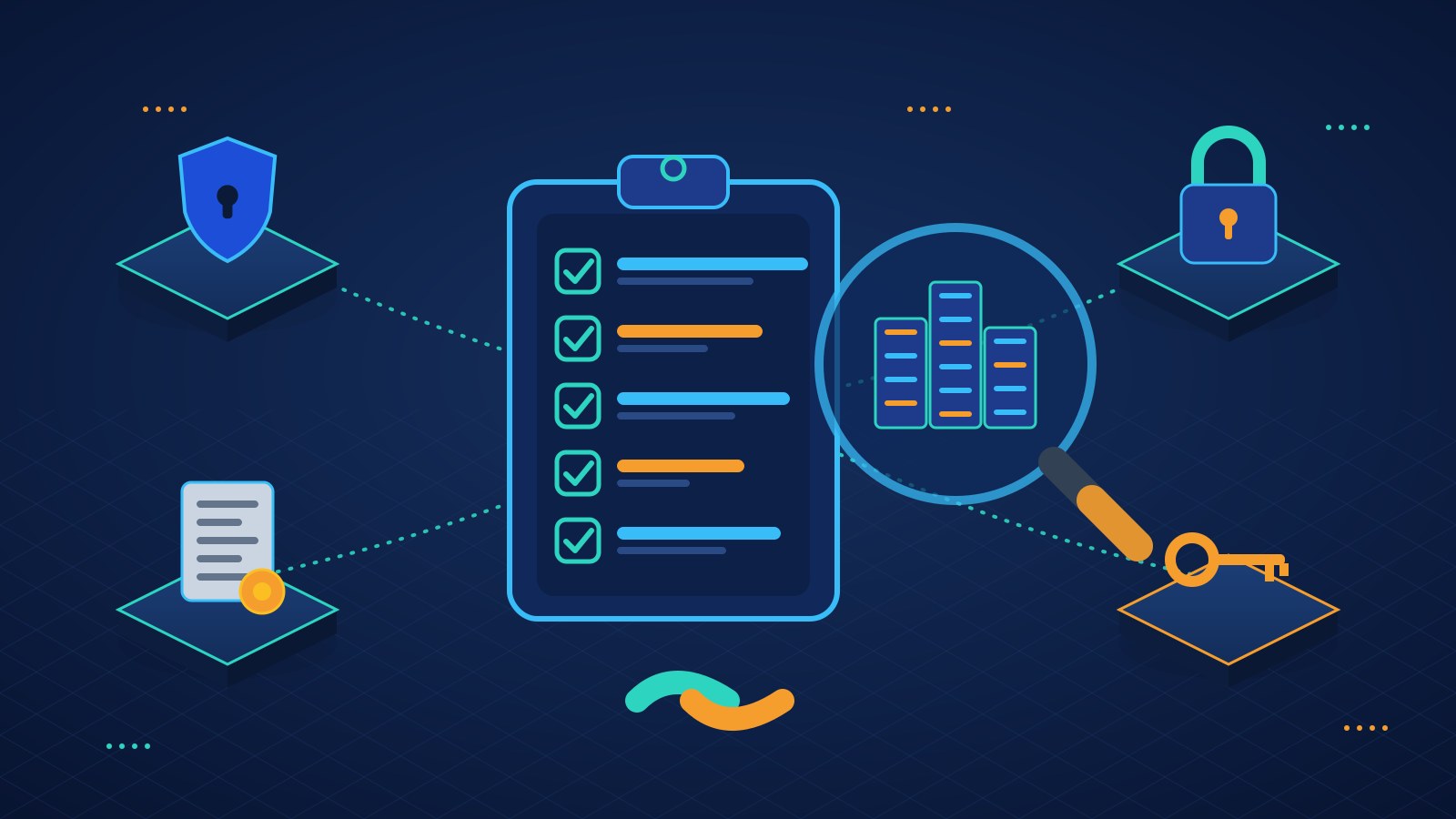
Use this table on every first call. You do not need perfect answers on every row, but you do need specific ones.
| Area | Ask the vendor | A good answer | Red flag |
|---|---|---|---|
| Proof of AI work | Show a live AI feature you built and explain what went wrong in it. | A working demo or portfolio item, plus an honest lesson learned | Only slides, or only non-AI projects |
| Model choice | Which model would you use for our case, and why not a cheaper one? | Trade-offs on quality, latency and cost; open to switching models | One favourite model for everything |
| Quality testing | How will you measure if the AI is good enough? | A test set of real examples, pass criteria, and re-testing after changes | “We’ll tune the prompt until it looks right” |
| Data handling | Where does our data go, who stores it and for how long? | Named providers, retention settings, masking of personal data | “The cloud handles that” |
| Security | How do you defend against prompt injection and limit what the agent can do? | Least-privilege tools, approval steps for risky actions, red-team tests | No answer, or “the model is safe” |
| Cost control | What will it cost to run per month at our volume? | An estimate with assumptions, usage caps and alerts | Only a build price, nothing on running cost |
| Ownership | Who owns code, prompts, evaluation data and fine-tuned models? | You do, in writing, with repo access during the build | Code kept on their servers until final payment |
Shortlisting AI partners right now? Send us your use case and this checklist, and we will answer every row in writing. Get a real project estimate within 24 hours. NDA on request.
Security and data questions to ask before you share anything
The OWASP Top 10 for LLM Applications (2025) is the most practical shared vocabulary here. Ask the vendor how they handle at least these three:
- Prompt injection (LLM01): how user text, emails or web pages are kept from overriding the system’s instructions.
- Excessive agency (LLM06): which tools the agent can call, with what permissions, and where a human must approve.
- Unbounded consumption (LLM10): rate limits and spend caps so a bug or attacker cannot run up your bill.
Then ask about the model provider’s data terms. For example, OpenAI’s data controls page says API data is not used to train its models unless you opt in, and that abuse-monitoring logs are kept for up to 30 days by default, with Zero Data Retention available to eligible customers. A good partner knows these settings for each provider they propose and sets them in your account, not theirs.
Certifications help but are not the whole story. SOC 2 reports cover a firm’s security controls, and ISO/IEC 42001 is the international standard for an AI management system; ISO says certification against it is voluntary. The NIST AI Risk Management Framework and its Generative AI Profile are public references a vendor can map its process to. If a firm holds none, ask for the controls themselves.
For Indian users’ data, check the partner understands the DPDP timeline. PIB confirms the DPDP Rules were notified in November 2025, with Consent Manager provisions after 12 months and most remaining duties after 18 months (13 May 2027). Our DPDP checklist for AI apps explains what to build now.
Contract, IP and handover clauses that protect you
Most disputes with development partners come from what the contract left out. For AI projects, add the items in this table. This is not legal advice; have your lawyer review the wording.
| Clause | What to write in |
|---|---|
| IP assignment | All code, prompts, system instructions, evaluation sets and fine-tuned model weights belong to you on payment of each milestone |
| Repository access | Code lives in a repo you own or can see from the first sprint, not only at the end |
| Accounts and keys | Model provider, cloud and vector-database accounts are opened in your company’s name |
| Data on exit | Vendor deletes your data and test copies at the end and confirms in writing |
| Model change notice | Vendor tells you before switching the model or provider in production, with re-test results |
| Handover | Docs, runbooks, test suite and a fixed support window after go-live |
Still deciding whether to build at all? Read custom AI agent vs off-the-shelf tools first.
Run a short paid pilot before the big contract
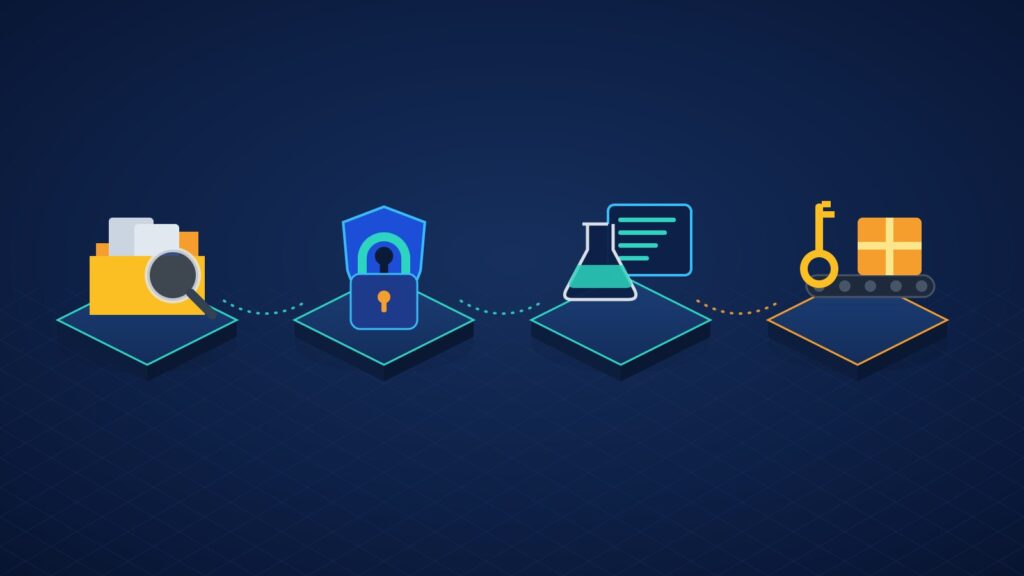
A small paid pilot shows how a team really works. Keep it to one workflow, a few weeks (our estimate for most first pilots is two to four weeks), and written success criteria agreed on day one.
- Pick one real task: for example, answering order-status questions or drafting replies to support tickets.
- Agree the test set: 50 to 200 real, anonymised examples with the answers you expect (a typical range; size it to your data).
- Set pass marks: accuracy on the test set, response time, and cost per task.
- Review the handover pack: code in your repo, a short architecture note, and a running-cost estimate at full volume.
Ask for traces of every model and tool call too (see our AI agent observability guide), and budget the full build with our AI agent cost guide.
Red flags that should end the conversation
- Guaranteed accuracy or ROI. AI output is probabilistic. Honest teams promise a measurement method, not a fixed result.
- Everything runs on their accounts. Your provider keys, cloud and repo should be yours, or at least transferable by contract.
- Fake or unverifiable proof. Case studies with no client name, no live link and no reference you can call.
- A quote with no running cost. Build price alone hides the monthly model and hosting bill.
FAQ
How do I choose an AI development company?
Shortlist three firms with live AI work in your domain. Put the same checklist to each: model choice, quality testing, data handling, security, running cost, ownership and handover. Compare written answers, call one client reference each, then run a short paid pilot with the strongest one before signing a longer contract.
What questions should I ask an AI vendor about data security?
Ask where your data is sent, which model providers are used, what retention settings apply, how personal data is masked in prompts and logs, and how prompt injection is prevented. Ask who can access production systems and how incidents are reported. Answers should name specific providers and settings, not general reassurance.
Should an AI partner have ISO 42001 or SOC 2?
They help, but neither is mandatory. ISO/IEC 42001 certification is voluntary, and many capable small firms hold neither standard. If a vendor has no certificate, ask for the underlying controls instead: access reviews, secrets management, logging, incident response and a documented AI risk process, ideally mapped to the NIST AI Risk Management Framework.
Who owns the code and prompts when an agency builds my AI app?
Only what the contract says. Ask for written assignment of code, prompts, system instructions, evaluation sets and any fine-tuned models to your company, plus repository access during the build. Open provider and cloud accounts in your company’s name so you can move teams later without rebuilding.
How long should a paid AI pilot take?
For a single workflow, two to four weeks is a common range in our experience; treat it as an estimate. The pilot should end with a test-set score, latency and cost figures, logged traces, and code in your repository. If those are missing, extend the pilot or change partners before committing to a full build.
Is it safe to outsource AI development to India?
It can be, if you vet the partner like any other vendor: NDA first, clear IP assignment, access controls, and data kept in accounts you own. India’s DPDP Rules phase in through May 2027, so a good Indian partner should already discuss consent and data handling for Indian users’ data.
How do I get an estimate from Eoxys?
Share your use case, the systems to connect, your data rules and your timeline. We reply with a scoped approach, answers to this checklist and a real project estimate within 24 hours, with fixed-cost, dedicated-team or hourly options. NDA on request.
Put Eoxys through the same checklist
Eoxys IT Solution has built software from Jaipur since 2009, with 700+ projects delivered. You can review our work on the portfolio and read client reviews, including from ZIP International’s CTO, BIDZ and DJ PlayNow, on our site.
Whether you need AI developers, a dedicated team, a chatbot or AI agent or a full AI and machine learning solution, get a real project estimate within 24 hours. NDA on request.
Related reading:
- Hire AI Developers in India: Models, Vetting and Red Flags
- How Much Does It Cost to Build an AI Agent in 2026?
- Custom AI Agent vs Off-the-Shelf Tools: How to Decide
Sources
Checked on 17 Oct 2026 against the ICO news release of 8 Oct 2026, Euronews (14 Oct 2026) for the EU AI Office requests, OWASP GenAI Security Project, OpenAI platform data-controls docs, ISO, NIST, AICPA and the PIB release on the DPDP Rules. The ISO page blocks automated requests (HTTP 403); its content was checked via a search snapshot. No prices quoted; pilot length and test-set size are labelled estimates.
- ICO: ICO secures changes from leading AI developers as scrutiny extends to AI agents (8 Oct 2026)
- Euronews: EU’s AI rules face first enforcement test over lab incidents (14 Oct 2026)
- OWASP GenAI Security Project: Top 10 for LLM Applications 2025
- OpenAI: Data controls in the OpenAI platform
- ISO: ISO/IEC 42001:2023 AI management systems
- NIST: AI Risk Management Framework
- NIST: AI RMF Generative AI Profile (NIST AI 600-1)
- AICPA & CIMA: SOC 2
- PIB: DPDP Rules, 2025 notified

Shafeeq Khan is a web developer who creates modern, responsive, and user-friendly websites with clean code and creative design