When a buyer asks ChatGPT, Perplexity, Gemini or Google’s AI Overviews “who builds X in India?” or “what does Y cost?”, the answer names a few sources. If your business is not one of them, you are invisible at the moment the shortlist is made.
AEO services (answer engine optimization) aim to change that: make your site easy for AI search tools to crawl, understand, quote and link. This guide is for founders and marketing heads. It explains what actually gets a business cited, what Google says you can ignore, and how to judge an AEO provider. Every platform rule here was checked on 19 October 2026 against Google Search Central, OpenAI and Perplexity documentation.
Key takeaways
- Google says optimizing for AI Overviews and AI Mode is “still SEO”: a page must be indexed and eligible for a snippet, and there are no extra technical requirements.
- ChatGPT search and Perplexity use their own crawlers (OAI-SearchBot and PerplexityBot). If robots.txt, your CDN or your firewall blocks them, you cannot be cited there.
- Google says you can ignore llms.txt, content “chunking” and inauthentic mentions for Google Search. Structured data is not required for AI features but must match the visible page.
- Citations are earned, not bought. Google and OpenAI both say inclusion is not guaranteed, so treat any AEO “guarantee” as a red flag.
- You can now measure part of it: Search Console has a Generative AI performance report, Bing Webmaster Tools has an AI Performance report, and ChatGPT tags clicks with utm_source=chatgpt.com.
In this guide
- What AEO services are
- How each answer engine finds and cites sources
- What actually gets you cited
- What Google says you can ignore
- A five-step AI search visibility audit
- How to choose an AEO provider
- Risks and limits
- FAQ
What AEO services are, and how they differ from SEO
AEO services are the work of making your content the source an AI answer engine quotes and links when people ask questions about your market. GEO (generative engine optimization) is a near-synonym. Google’s own guide to optimizing for generative AI features defines both terms and says that, from Google Search’s perspective, optimizing for generative AI search “is optimizing for the search experience, and thus still SEO.”
So AEO is not a separate trick. It is SEO with a wider target list and a different goal: being named and linked inside an answer, not only ranked in a list of links.
| Classic SEO | AEO / GEO | |
|---|---|---|
| Goal | Rank a page in search results | Be cited or linked inside an AI-generated answer |
| Where it shows | Google and Bing results pages | Google AI Overviews and AI Mode, ChatGPT search, Perplexity, Gemini, Microsoft Copilot |
| Who reads your site | Mainly Googlebot and Bingbot | Those plus OAI-SearchBot, PerplexityBot and user-triggered fetchers |
| Typical query | Short keywords | Longer, conversational questions that engines split into related searches |
| How you measure it | Rankings, clicks, conversions | Citation reports, referral traffic from AI tools, branded search and leads |
We covered the Google side in depth in Google AI Overviews: What Businesses Need to Know. This post widens the view to every major answer engine and turns it into a buying guide.
How each answer engine finds and cites sources
Each engine retrieves pages from a search index, then writes an answer with links to the pages it used. Google calls this retrieval-augmented generation plus “query fan-out”: the model runs several related searches to gather sources. Google’s AI features page says AI Overviews and AI Mode may use this technique, which is why a single good page can be cited for questions it never names word for word.
The practical difference between engines is which crawler must reach your site and where you can see results:
| Answer engine | Crawler or control that matters | How it links to you | Where to measure |
|---|---|---|---|
| Google AI Overviews and AI Mode | Googlebot (normal Search crawling); page must be indexed and snippet-eligible | Supporting links inside the answer | Search Console: Performance report and Generative AI performance report |
| Gemini Apps | Google-Extended token controls use of your content for Gemini training and grounding; it does not affect Google Search | Grounded answers with sources | No dedicated report found |
| ChatGPT search | OAI-SearchBot (search); GPTBot is training only; ChatGPT-User is user-triggered | Citations and links in answers | Analytics: ChatGPT adds utm_source=chatgpt.com to referral links |
| Perplexity | PerplexityBot (search index, not used for model training); Perplexity-User (user-triggered) | Linked citations | Referral traffic in your analytics |
| Microsoft Copilot and Bing AI summaries | Bing’s crawler and your robots.txt rules | Citations in answers | Bing Webmaster Tools: AI Performance report (public preview) |
Two details catch businesses out. First, OpenAI’s crawler documentation says sites opted out of OAI-SearchBot “will not be shown in ChatGPT search answers”, and blocking GPTBot (training) is a separate choice. You can block training and still allow search. Second, both OpenAI and Perplexity ask you to allow their published IP ranges, so a firewall or CDN rule can block you even when robots.txt looks fine. We have seen hosting CDNs return 429 errors to AI crawler user agents on sites whose robots.txt allows every bot.
What actually gets you cited
Google’s optimization guide is blunt: creating unique, useful “non-commodity” content will likely influence your presence in generative AI search more than any other suggestion in the guide. For a business site, that translates into a short list of jobs:
- Make every important page reachable. Allow Googlebot, Bingbot, OAI-SearchBot and PerplexityBot in robots.txt and at the CDN or firewall. Keep key content in HTML text, not only in images, PDFs or scripts that fail to load.
- Answer buyer questions on your own pages. Service pages and posts that state what you do, for whom, where, at what kind of cost and with what proof are the pages answer engines can quote. Open each section with a direct, self-contained answer, then the detail.
- Say something others cannot. First-hand detail (your process, real projects, your own data) is what Google calls non-commodity content. A rewrite of the top ten results gives an engine no reason to cite you.
- Keep facts consistent everywhere. Your name, services, locations and contact details should match across your site, Google Business Profile and directory listings. Google’s guide points local businesses and shops to Business Profile and Merchant Center.
- Use structured data honestly. Organization, Article and Product markup help search engines understand a page, but Google says no special schema is needed for AI features and markup must match the visible text.
- Earn real mentions. AI answers draw on what others say about you in reviews, forums and the press. Google warns that inauthentic mentions do not help.
Want to know whether ChatGPT, Perplexity and AI Overviews can even read your site? Eoxys offers AEO services for businesses that want to be cited in AI answers. Send us your URL and the questions your buyers ask. Get a real project estimate within 24 hours. NDA on request.
What Google says you can ignore
A lot of AEO advice online is untested. In May 2026 Google added a “mythbusting” section to its generative AI optimization guide, and its documentation changelog records related changes. Here is what that means for your budget:
| Popular AEO tactic | What Google’s documentation says (19 Oct 2026) | Our advice |
|---|---|---|
| Publishing an llms.txt file | Not needed for Google Search; it neither helps nor harms visibility, and Google Search ignores it. Fine to keep for other services that use it. | Low priority. Cheap to add, but do not pay for it as a ranking fix. |
| “Chunking” pages into tiny sections | No requirement; Google can understand pages that cover several topics. | Structure for readers: clear headings and short paragraphs. |
| Rewriting content for AI | Not needed; AI systems understand synonyms and meaning. | Rewrite only if the content is unclear or thin for humans. |
| Mass pages for every query variant | Doing this mainly to manipulate rankings or AI answers violates the scaled content abuse policy. | One strong page per real buyer question. |
| Buying or seeding mentions | Inauthentic mentions are not as helpful as they seem; spam systems apply to AI responses. | Invest in reviews, case studies and real PR. |
| FAQ schema for rich results | Google stopped showing FAQ rich results from 7 May 2026. FAQPage is still a valid schema.org type. | Keep FAQs if they help readers; do not expect a Google rich result. |
These points are about Google Search. Other engines publish less about ranking, so assume the same: readable, accurate, crawlable pages with real expertise win.
A five-step AI search visibility audit
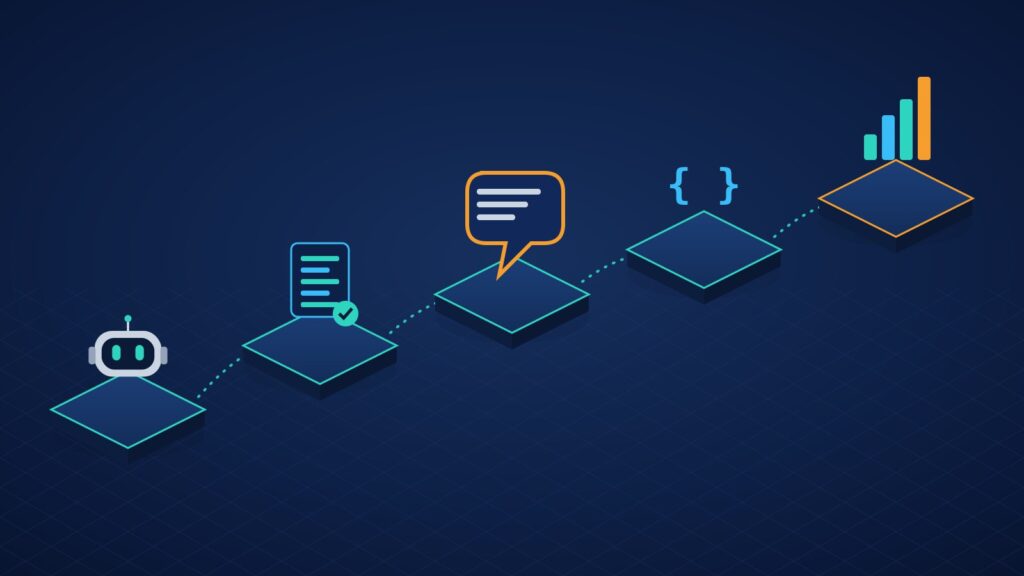
This is the order we use on a business site. There is little point polishing content an engine cannot reach.
- Access. Read robots.txt for Googlebot, Bingbot, OAI-SearchBot, PerplexityBot and
Google-Extended. Then test from outside: does your CDN or firewall answer these crawlers with errors or challenges? Check server logs for their visits. - Indexing and snippets. In Search Console, confirm your key pages are indexed and not blocked by
noindex,nosnippetor a tightmax-snippet. Google says these controls limit what AI features can show. Google’s guide also says a site must be included in Search generative AI features in Search Console to be eligible, so check that setting. - Answer coverage. List the 20 to 50 questions buyers ask before they contact you (our rule of thumb). Mark which have a clear, current answer on your site, and fill the gaps on the pages where they belong.
- Entity and schema check. Make your name, services, locations and contact details consistent. Validate Organization and Article markup and confirm it matches the visible page.
- Measure and repeat. Set a baseline in Search Console’s Generative AI report, Bing’s AI Performance report and analytics (filter for chatgpt.com and perplexity.ai referrals), then review monthly.
If you sell online, the same access rules apply to shopping agents. Our guide to getting your store ready for AI shopping agents covers product data and agent checkout. If you want to go further than being cited and actually run inside ChatGPT, see building a ChatGPT plugin for your business.
How to choose an AEO provider
Google’s guide advises caution with third-party AEO and GEO advice, and says no third-party tool has access to its internal ranking or AI systems. Use that as your filter when you compare agencies:
| Ask for | Good sign | Red flag |
|---|---|---|
| Method | Starts with a crawl-access and indexing audit, then content and entity work | Starts by selling llms.txt files, schema packs or “AI-ready” rewrites of every page |
| Promises | Clear deliverables and how progress will be measured | Guaranteed citations, “#1 in ChatGPT” or a fixed number of AI mentions |
| Data | Uses Search Console, Bing Webmaster Tools and your analytics | Claims “internal” Google or OpenAI metrics |
| Content | Interviews your team to capture real expertise and proof | Mass-produces pages for every query variation |
| Technical depth | Can change robots.txt, CDN rules, rendering and schema on your stack | Only delivers a slide deck |
Technical access is where many marketing-only agencies stall. Fixing a CDN rule, server-rendering a JavaScript page or correcting schema in a WordPress theme is development work. That is why we run AEO alongside our web design and development, WordPress and AI and machine learning teams.
Risks and limits
- No guarantees. Google says meeting every requirement does not guarantee crawling, indexing or serving. OpenAI’s Publishers FAQ likewise says any public site can appear but does not promise placement.
- Answers change. AI responses vary by user, wording and model updates. Track trends over months, not screenshots.
- Measurement gaps. Analytics only sees clicks. An answer can mention you without a click, and Bing notes its citation data is sampled and aggregated.
- Training vs search trade-off. Blocking GPTBot or
Google-Extendedlimits AI training use, and Google-Extended also covers grounding in Gemini Apps. Decide per engine what you want, rather than blocking all AI bots by default. - Spam risk. Google applies its spam policies to AI responses too. Scaled, low-value pages can hurt the whole site.
FAQ
What are AEO services?
AEO (answer engine optimization) services make your website easy for AI answer engines such as ChatGPT search, Perplexity, Gemini and Google AI Overviews to crawl, understand and cite. The work usually covers crawler access, indexing, answer-first content for real buyer questions, consistent business details, honest structured data and measuring citations and AI referral traffic.
Is AEO different from SEO?
Partly. Google says optimizing for its AI features is still SEO: pages must be indexed and snippet-eligible, with no extra technical requirements. AEO widens the target to ChatGPT, Perplexity and Copilot, which use their own crawlers, and it measures success by citations and AI referrals rather than rankings alone.
How do I get my business cited in ChatGPT?
Allow OAI-SearchBot in robots.txt and let OpenAI’s published IP ranges through your CDN or firewall; OpenAI says sites that block it are not shown in ChatGPT search answers. Then publish clear, accurate pages that answer your buyers’ questions. Blocking GPTBot only affects training, not search. Placement is never guaranteed.
Do I need an llms.txt file?
Not for Google. Google’s documentation says Google Search ignores llms.txt, so it neither helps nor harms your visibility there. It is fine to publish one for other tools that read it, and it costs little, but it is not a substitute for crawlable, useful pages. Treat it as optional, not as an AEO fix.
Does schema markup help with AI Overviews?
Not directly. Google says structured data is not required for AI features and there is no special schema to add, though it still helps with rich results and must match the visible page. Google also stopped showing FAQ rich results from 7 May 2026. Organization and Article markup remain sensible basics.
How do I measure AI search visibility?
Use Search Console’s Generative AI performance report for Google, and Bing Webmaster Tools’ AI Performance report for Copilot and Bing AI summaries. In analytics, filter referrals from chatgpt.com, since ChatGPT adds utm_source=chatgpt.com, and from perplexity.ai. Set a baseline first and review the trend monthly.
Can an agency guarantee AI citations?
No. Google states that meeting every requirement does not guarantee crawling, indexing or serving, and OpenAI says placement in ChatGPT search is not guaranteed. Answers also vary by user and change with model updates. A credible provider promises clear deliverables and measurement, not a fixed number of citations or a top spot.
How do I get an estimate from Eoxys?
Send us your website, your main services and markets, and the questions buyers ask before they contact you. We reply with what we would check first and a real project estimate within 24 hours, with fixed-cost, dedicated-team or hourly options. NDA on request.
Get cited in AI answers with Eoxys
Eoxys IT Solution has built software from Jaipur since 2009, with 700+ projects delivered across web and mobile apps, e-commerce, fintech, health and EdTech. You can see the work on our portfolio.
Our AEO service helps businesses get found and cited in ChatGPT, Perplexity, Gemini and Google AI Overviews, backed by the developers who can make the technical fixes on your site. Get a real project estimate within 24 hours. NDA on request.
Related reading:
- Google AI Overviews: What Businesses Need to Know in 2026
- AI Shopping Agents for E-commerce: Get Your Store Ready Now
- Build a ChatGPT Plugin for Your Business: What DevDay Changed
Sources
Checked on 19 Oct 2026 against Google Search Central (AI features and your website; the guide to optimizing for generative AI features; the documentation changelog for the FAQ rich result removal and llms.txt note; Google’s common crawlers list for Google-Extended), OpenAI’s crawler documentation and Publishers and Developers FAQ, Perplexity’s crawler documentation, Bing Webmaster Tools’ AI Performance help page and schema.org. The OpenAI Help Center blocks automated requests, so that FAQ was read through search on the same day. The audit question range is our rule of thumb, not a published figure.
- Google Search Central: AI features and your website
- Google Search Central: Optimizing for generative AI features on Google Search
- Google Search Central: Latest documentation updates
- Google: List of common crawlers (Google-Extended)
- OpenAI: Overview of OpenAI crawlers
- OpenAI Help Center: Publishers and Developers FAQ
- Perplexity: Perplexity crawlers
- Bing Webmaster Tools: AI Performance
- schema.org: FAQPage

Shafeeq Khan is a web developer who creates modern, responsive, and user-friendly websites with clean code and creative design